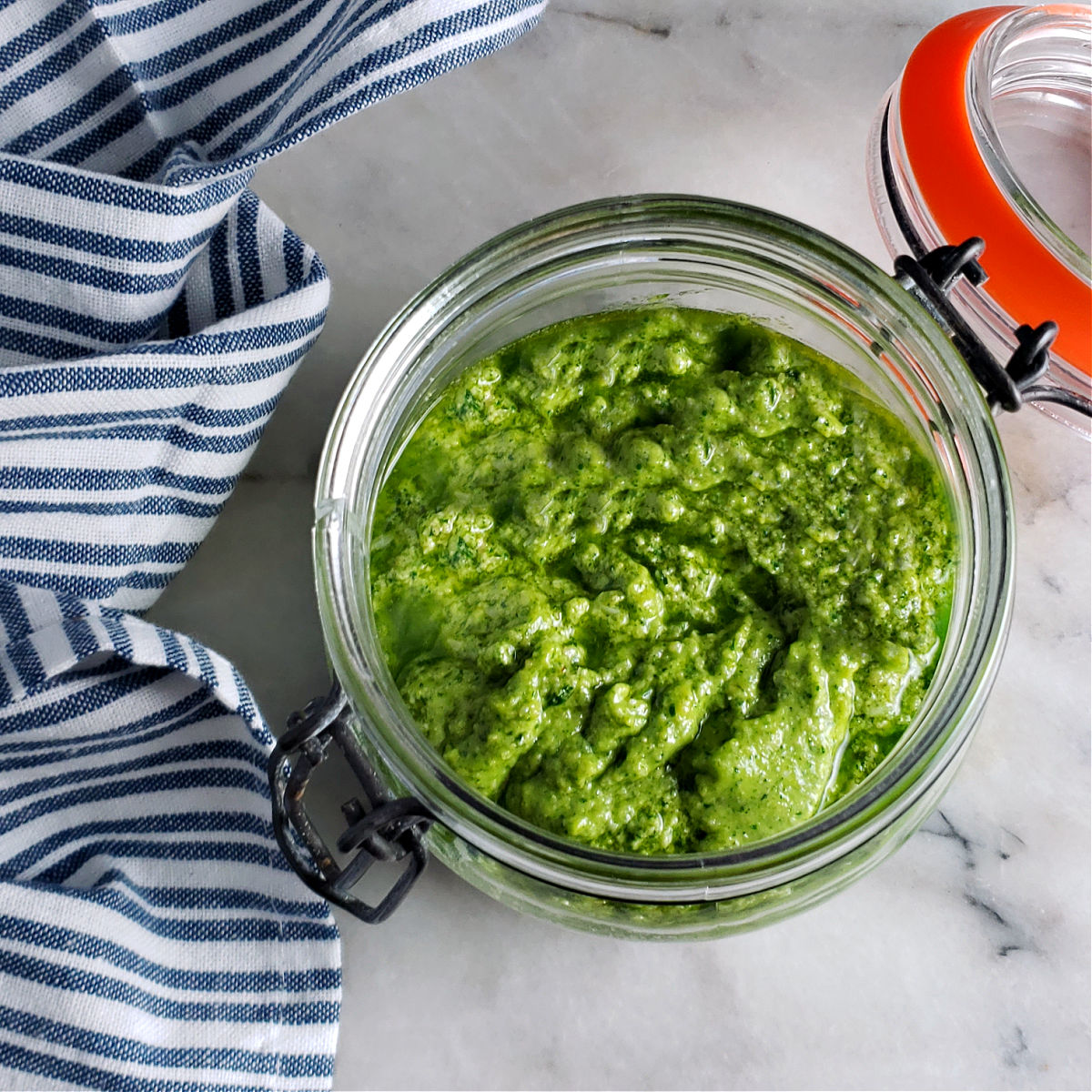

If there was ever a super simple recipe that seemed to cause so much angst, it has got to be Pesto! This is a classic recipe for Pesto, Pesto alla Genovese, the OG of Pesto.

Pesto alla Genovese

Now the reason I say “OG” Pesto is because these days, many of us (including myself) make similar concoctions with all kinds of ingredients that we refer to as Pesto.
About Pesto alla Genovese:
The most famous Pesto is Pesto alla Genovese, said to have originated in the city of Genoa in Northern Italy sometime around the 16th century. Pesto is D.O.P. protected; in Europe, only pesto made with the classic ingredients in the classic way and in the right region, can be called Pesto.
Back in the day, Pesto was made with a marble mortar and pestle, and this tradition is taken seriously by Italians. How seriously? There are contests, including this Pesto World Championship held annually. These days, you’re most likely to see Pesto made in a blender or food processor, at least here in the States.
My ingredients are classic, even if they don’t come from Genoa. There are normally just five: Garlic, Basil, Pine Nuts, Cheese (traditionally Pecorino or Parmesan or a combo), and Olive Oil.

Making Pesto alla Genovese:
Even staying within those strict guidelines, you can still tinker a bit and make Pesto how you wish. The recipe below is how I like mine. Feel free to taste and adjust until yours is perfect for you. A few things to think about:
- Your pesto can be more or less garlicky, more or less salty, and *slaps forehead* you can go off the charts wild and add just a teensy bit of red pepper flakes or other ingredients.
- Pesto traditionally is finely blended, and homogenous, with small bits of basil, nuts, and cheese throughout, and can be as fine or as chunky as you’d like. Pesto in jars is almost always chunkier and very oily (it’s a canning/safety thing) and many here in the US are used to that.
- Of course, you can play with the olive oil, choosing something mellow and buttery or grassier and sharper, or anything in between. Extra virgin, cold-pressed, from one location is always the best – most important, though, is that you like the taste!
- Still staying traditional, feel free to use either Pecorino or Parmesan or a combo of both cheeses in your Pesto. If you’ve never used Pecorino, it might surprise you. Interested in the difference between the two cheeses? Check out this article by the Food Network.
- If you wish, a touch of lemon to preserve the gorgeous color can be added. This is primarily to help it retain its color if stored in the fridge, but also adds an intriguing taste. See below for more about preserving your pesto.

Pesto alla Genovese on crostini
How to Use Pesto alla Genovese:
There are so many ways to use your Pesto!
- I love it with pasta, as the Italians use it. Combined with a little pasta water it becomes a luxurious sauce. A spoonful can easily dress up store-bought tortellini or ravioli.
- It’s a fabulous sandwich spread. Layer it into fancy grilled cheese made with just about any white cheese and Artisan bread. Spread it on any sandwich made with Italian cold cuts. Spread it on Crostini and use it as an app.
- Stir some into your tomato soup! Swirl a spoonful into almost any soup that can use the perky basil flavor and a little extra richness.
- Check out my Pesto Pasta Salad With Grilled Vegetables or mix up this Easy Basil Pesto Salad Dressing.
- I could go on, but it’s been done! See 50 Things to Make with Pesto. What can I say? That should keep most, including me, busy for a while!
Storing Pesto in the Fridge:
Pesto has a nasty habit of turning brown in the fridge and freezer. There are several methods used to prevent this, with varying success. I prefer the first.
- Blanch the basil: This prevents browning and preserves the bright color. Bring a good-sized pot of water to a boil, fill a metal strainer with your basil, and dunk it in the water for 30 seconds. Immediately remove the strainer and plunge into ice water to stop the cooking. Shake off the excess water and roll the basil gently in paper towels before using.
- Lemon juice: A teaspoon of lemon juice per cup of packed basil leaves is added to the Pesto. It will slightly flavor the pesto but in a good way.
- Olive oil: Add pesto to a jar, smooth the top, and top with a thin layer of olive oil. It keeps the air out. My results have been very mixed.
- Plastic or paper: Add pesto to a jar and top with plastic wrap or waxy paper, pressing it into the surface of the pesto.
Freezing Pesto:
If I freeze Pesto, I always blanch the basil before making the Pesto. The enzymes that cause browning aren’t affected by freezing, so the pesto will deteriorate over time if not blanched. Lemon juice may work for a week or two, but can’t be counted on.
To freeze, add Pesto to a Ziploc and push the pesto to the bottom of the bag in a tidy row. Flatten the bag to remove as much air as possible. Once frozen, roll the Ziploc. The Pesto will still be at great quality for up to three months or so. Some detect a textural change in the cheese; the solution is to omit it and to the Pesto when thawed.
I never freeze in Ice-cube trays. It’s time-consuming, messy, and the trays discolor and pick up odors. Once frozen, the cubes of pesto are often ganged up in a Ziploc, where they take up a lot of room and sometimes meld together.
Thawing Pesto:
Some mention thawing in the microwave. Don’t ever do that!
- For a small amount, bend the Ziploc to break off a chunk. Open the Ziploc, remove it, and place the unused portion back in the freezer.
- Thaw on the counter or in the fridge. If thawed in the fridge, set it out about 20 minutes before using. Be mindful of the two-hour safety window.
Saving Money on Pesto alla Genovese:
A store-bought Pesto costs about $4.99 for a seven-ounce (about a cup) container, so if you were buying as much as this recipe makes, you’d be spending about 10 bucks.
- Herbs: Grow your herbs, in the garden or a pot. They’re fresher and a huge cost savings. Pesto is said to be best made from the smaller leaves picked while the plant is flowering.
- Nuts: Pine nuts can be pricy. Pesto alla Genovese uses European pine nuts – I use whatever is at a reasonable price, including Pinon nuts. Check online; Nut Houses sometimes have amazing pricing. Prices vary wildly at the grocery, so check more than one. Keep your eye open at your store’s discount bins.
- Olive Oil: The best virgin olive oils are cold pressed, decent ones come out of California these days. Some of the best pricing is at your buyer’s clubs.
- Cheese: For the best quality and pricing, buy in wedges and ALWAYS avoid the pregrated. Your buyer’s club will have decent quality and price, but discount stores like Aldi or Lidl are a great budget option.
I’m a good shopper and grow my herbs. I made this Pesto (2 cups) for $1.72 in 2024.
Alternatives to the Classic Pesto:
You might want to check out my Radish Top Pesto or Fresh Pea Pesto. The Pea Pesto is surprisingly good and a family fave.

Pesto alla Genovese
Classic Pesto

- Prep Time: 10 minutes
- Total Time: 10 minutes
- Yield: 2 cups 1x
- Category: Sauce
- Cuisine: Italian
Ingredients
- 3 medium cloves garlic
- 2 cups fresh basil leaves, stems removed
- 1/2 cup pine nuts (pignolia)
- 1 good pinch of sea salt
- 1/2 cup extra virgin olive oil
- 1/2 cup Pecorino or Parmesan (or a combination) cheese grated
Instructions
Add garlic, basil, pine nuts, and salt to a food processor. Pulse several times and while pulsing, drizzle in olive oil, stopping to scrape down sides as needed. Add cheese and pulse about 2 to 3 more times. If too thick, add a little more olive oil. Taste and adjust for salt if needed.
Use immediately. If planning on storing in the fridge, prior to making the pesto, either use 2 teaspoons of lemon juice for every cup of packed basil leaves or blanch the basil for 30 seconds in boiling water. After blanching, place in ice water to stop the cooking process, drain. Place the basil on a clean towel and pat dry before continuing with the recipe.
For freezing, for best results, use the blanching method.
