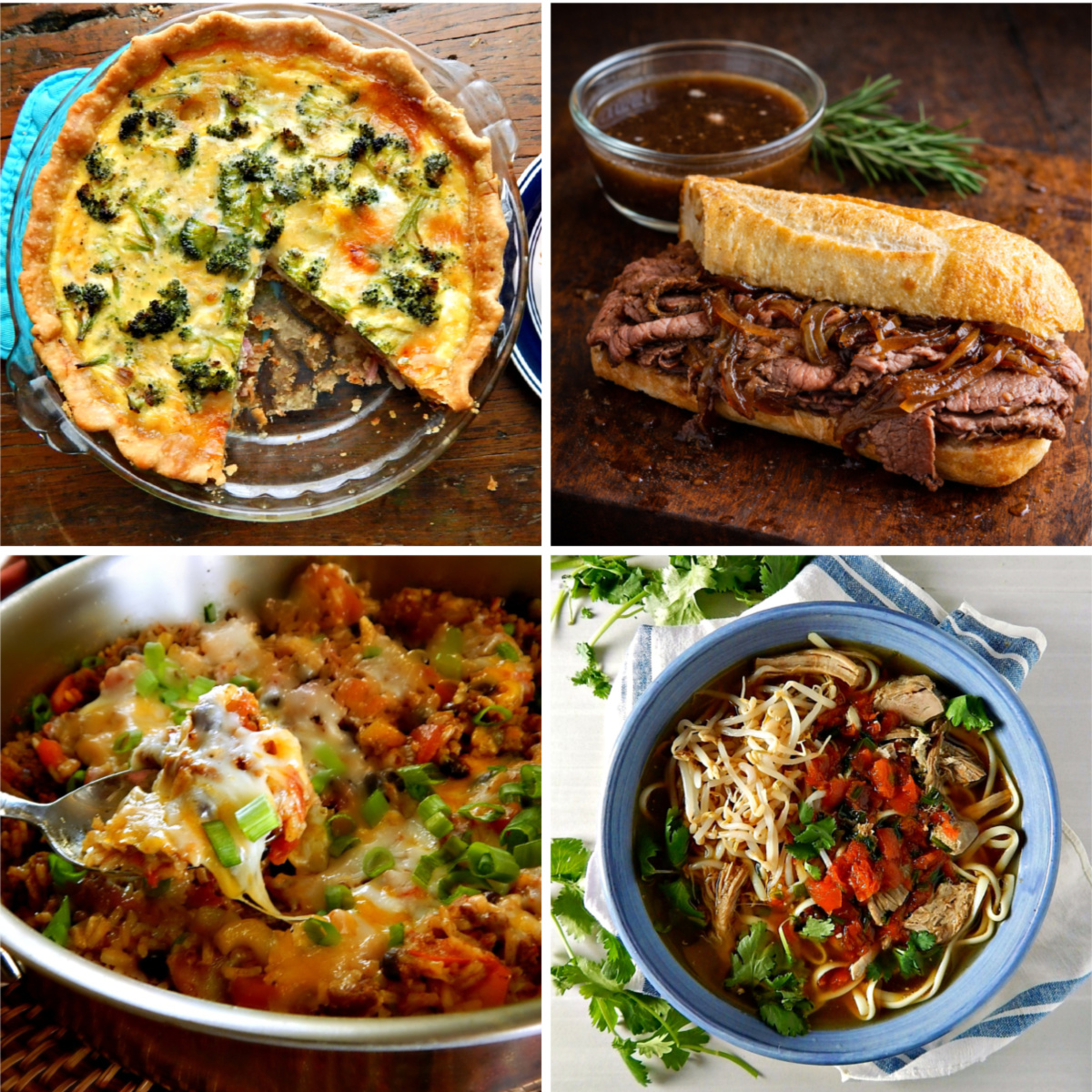

Did you know leftovers are the most expensive food in the house?
Leftovers are a product of your time, your money, and your energy: You’ve planned for meals and the groceries, paid for the gas to the store and back. Shopped for the groceries and bought them, maybe packed them, transported them, carried them in the house, stored them, cooked them, and then stored them again!
Frankly, it’s a lot of time, effort, and energy, both physical and mental. Make good use of them.

Shortcut Ramen made from Vaguely Vietnamese Pork
Start to think of leftovers in a new way: as fabulous building blocks just waiting to be refashioned into something marvelous, not something to shove in the fridge, sitting until the fridge is cleaned out. (Scroll to the bottom for links to pages dealing with specific leftovers.)
Speaking of cleaning out the fridge, Friday was always our go-to “Smorgasbord” night when we’d go through the fridge, and everyone had their favorite of what needed to be eaten. It helped prevent waste and cleared up space for weekend grocery shopping.
There are two types of leftovers: Planned Leftovers and those Smidges & Bits of this or that cluttering up your fridge.
And while there may be some overlap between the two types as far as ideas and recipes, I like to categorize leftovers by type to help you find the ideas & inspiration you may need.
Planned Leftovers:
Be intentional about your money, food & time. Develop a knack for identifying opportunities to shortcut meals. Make extra for future meals and for your own “convenience food” later. It’s cooking smart. Here are a few ways to easily accomplish this with an example or two.
- Meal Prep: It’s investing a couple of hours or a day to prepare and refrigerate or freeze multiple whole meals with plans to serve those meals later. This is real meal prep: more of an investment in money, planning, and cooking. For me, and for many, this is hard to sustain and exhausting. It might be the best way to save time, but it isn’t the best way to save on groceries. Instead, I do the following, always looking to make easy shortcuts through the course of the week, and since I shop weekly and carefully, I use mostly sale-priced ingredients.
- Planned Leftovers: At the most basic level, planning for leftovers might be making a large meal item so you’ll have leftovers. An easy way to get ahead would be to double meals that freeze well, one to eat and one to stash away for later. Example: double a casserole, serve one, freeze one.
- Large Batch: It might be making the best use of a longer cooking item (protein, or grains & beans, etc.) & planning several meals using it through the week. I do this regularly. A favorite at our house was pulled pork served for a BBQ dinner, then later in the week, over a baked or sweet potato, and towards the end of the week, used in a chili.
- Make Best Use of Time: Make it easy; when cooking any of those ingredients that take longer to cook, simply make more to put in the freezer so it’s ready for future meals down the line. If I cook dried beans, I make the whole bag, serve one night, then freeze the rest. Same with items like quinoa, wild rice, steel-cut oats, and so on. Even rice is often doubled, some to serve, some frozen (short-term only) for fried rice.
- Building Blocks: I’m always looking for opportunities to use sale-priced ingredients and/or save time later. Even sautéed vegetables for dinner can be doubled, tripled, or more and used later as the start of another meal; a mirepoix (onion, celery, carrot) or a trinity (onion, celery, bell pepper) is handy to have in the freezer. I like to do this and make “meal kits”, see below.
My Meal Kits are a great example of #4. When faced with too many bell peppers, I selected several recipes calling for them. I diced and sauteed them along with other vegetables for the meals. They portioned labeled with the ingredients and the intended meals.


While planned leftovers save time, they can also save money. Here are a couple of examples of that:
- Every meal built on groceries bought on sale reflects those low prices. Chicken breasts on sale? Serve for dinner and make extra to put aside for a casserole later. Divide the rest into packs suitable for future meals. Cut into strips for stir fry, marinate breast or thighs, or prep them to cook in other favorite meals. Label with intended use, date, and freeze.
- Pricier, premium items (steak, salmon, etc.) can be “cost-averaged” over more than one meal. It’s the “star of the show” the first night. Later, a small amount of leftover can be repurposed in a meal that needs only a little. (Cost averaging can be done by serving a pricier meal followed by a dirt-cheap one, too.)
An example might be turning leftover steak or roast into another, secondary meal. You can buy thinly sliced steaks for the Garlic Steak Bahn Mi, or use thinly sliced leftover steak or roast.

Garlic Steak Bahn Mi
Smidges and Bits:
Containers of small bits of leftovers cluttering up your fridge are always an opportunity to refashion, although they may be more of a challenge than planned leftovers. Packed lunches are a great way to use leftovers.
Click the link at the bottom of the page or here for Making Use of Leftovers & you’ll find ideas and inspiration broken down by the type of food. I’m a leftover queen, so don’t be too shocked by what I’m saying here, and do be honest about your random leftovers.
- Get Creative: Find some inspiration in the links below to refashion bits of this or that.
- Be Selective: Waste is waste, but wrapping and refrigerating items that won’t be eaten, only to toss later, doesn’t mitigate the damage.
- Beware: Don’t let bits and pieces of former meals waylay a careful menu plan, causing other food in your fridge to age past the point of no return. Freeze leftovers, if necessary, but again, only if they will be used.
let’s talk about what food waste:
In August of 2017, the NRDC released an update on their landmark 2012 study, Wasted: How America is losing 40% of its Food. The huge amount not only affects budgets but also resources as well. A few highlights:
- The average family of four wastes $1,345 to $2,275 worth of food each year. (It seems low based on what I know some people waste!)
- If the average American buys five bags of groceries, the amount of waste is like dropping two of those bags in the grocery store parking lot.
- We waste over 400 pounds per person, annually, over 10 times the amount of our counterparts in Southeast Asia or Africa.
- We reject food for cosmetic reasons, throw out items past or close to their “sell by” dates, and leave an absurd amount of food to rot in our fridges.
- We waste 50 percent more food today than in the 1970s.
- Several studies have found that approximately 3/4’s of people believe they waste less food than the average American…studies find that those who keep diaries of food waste underreport the amount by about 40 percent, compared with what can be found in their garbage.
- In the United States, more than 80 percent of consumers report that they discard food prematurely due to confusion over expiration dates.
Food waste does not just impact us on a personal, financial level; it impacts planetary resources at all stages. This article from Forbes is an eye-opener.

helpful links:
Taking advantage of leftovers can be a bit of a dance, with a few ad-lib moves interrupting the pattern. Learn to do that dance well and you’ll not only eliminate potential waste but make the most of your time, effort, and money. Here are a few links to help give you your best moves.


6 thoughts on “Fabulous Leftovers”