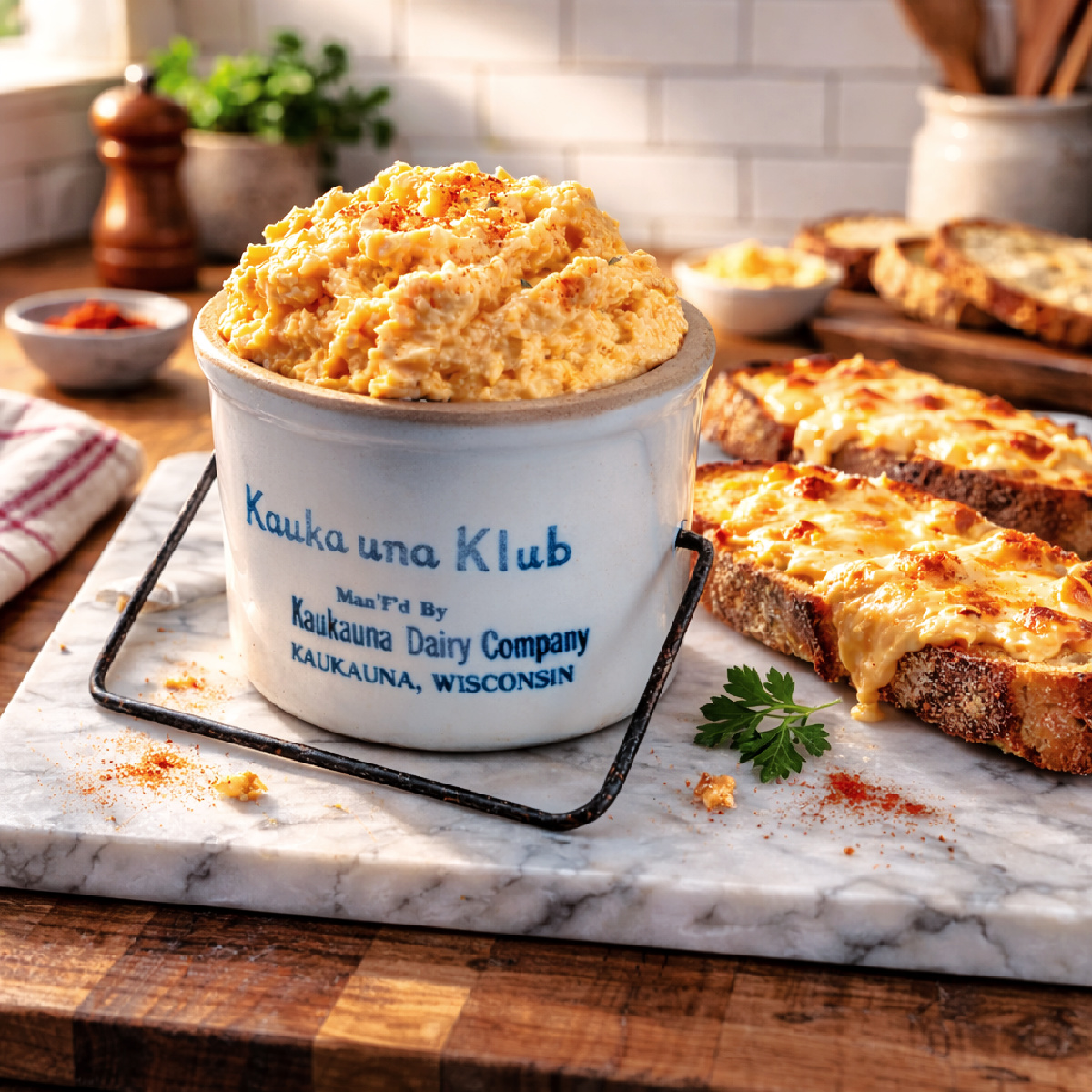

I’m one of those strange creatures that reads cook books like novels, which is how I came upon Fromage Fort. It was in a big thick compilation book of recipes from “The Gourmet Cookbook.”

Fromage Fort, made from leftover cheese

My Grandpa Charlie always said if you let a book fall open, it will always open to the “dirty” part. Much as I try to keep things clean, that’s exactly what happens with my fave cookbook pages. They’re smudged and well-worn, with notes here and there – this recipe is a prime example!
About Fromage Fort:
Just what is Fromage Fort, you may ask. It’s Frenchfor strong cheese. The recipe for it is so simple, it’s genius. It’s a cheese spread made from bits and pieces of leftover cheese, with just a bit of butter or soft cheese to make it creamy and a touch of wine.
That tickles me because on my leftovers pages, I’ve said, “If all else fails when reviving leftovers, call them by a French name.” I’m like YES! 100% YES! Ya gotta admit that Fromage Fort sounds so much fancier than a spread made with leftover cheese!
Fromage Fort will be different every time it’s mixed up, depending on what goes into it. If you like strong, flavorful cheese and are open to the experience, you’re gonna love Fromage Fort. Fromage Fort is a lot like my recipe for Old English Potted Cheese, another classic made from leftover bits of cheese and a touch of hooch. This German Obatzda has some similarities, too.

Obatzda – Bavarian Cheese Spread
Varying the Recipe:
The Fromage Fort can be made very simply, as in this recipe, with just a bit of wine added along with the hard cheese and butter. Consider a creamy cheese like goat cheese, cream cheese, ricotta, or mascarpone in place of all or some of the butter
All kinds of cheese can go in this. Carefully orchestrate by using just a few, or go rogue and use everything and anything available. For inspiration, check out this list of French cheeses, although you aren’t limited to using just French cheese. Be careful of any very strong cheese; too much can overpower the whole mixture.
The rinds don’t have to be removed; if you enjoy them and they won’t overpower the taste of everything else, use them all or just part of them. It’s easy to go by taste, adding in a little, then a little more if it’s heading in the right direction.
Although the recipe says white wine, any wine can be used. Darker wines might give the mixture a strange color. A few choice spices, herbs, or garlic (use judiciously – they can taste stronger, especially the garlic after they’ve sat for a while) never hurt anything. Use your imagination and let your taste buds guide you.

Grinding all the cheese up in the food processor
Making Fromage Fort:
Basically, to make Fromage Fort, take any odds and ends of leftover cheese, chop and/or grate it, and mix it up with butter or softer cheese and some wine. The best bet is to use a food processor, but it can be done by hand. After all, it’s been made in France that way for centuries.
If making in a food processor, cut any hard cheese into approximately 1″ pieces, and using the chopping blade and pulsing, toss the cheese into the bottom of the processor. Once broken down into tiny bits, add in butter or a creamy cheese of choice and continue to process, pulsing until all is fairly blended. Add the wine and continue until a cohesive mixture is made.
If making by hand, grate all the hard cheese and cut or mash the soft cheese into the mixture, again adding wine at the end.
Note: I don’t usually make a pound of Fromage Fort as the recipe says, simply because I don’t generally have a pound of bits and pieces of leftover cheese on hand. I just scale the recipe down to what I have.

Fromage Fort – as good as any reason to be careful where you eat – Homer knows she’s not allowed on the counter but couldn’t resist the smell!
Serving the Fromage Fort:
First of all, I hope there is no outrage at my cat, Homer, inserting herself into the picture. She usually is good about not getting up on counters, but she was puzzled by the strong smells! You can see she’s a bit timid and trying to figure out what was going on here.
Serve this as soon as it’s made by spreading it onto baguettes and broiling or not broiling. Or serve it with a neutral-tasting cracker, like a water cracker.
Once refrigerated, the mixture will become stiffer, and the flavors will be slightly muted. Let it sit at room temperature for a bit before serving, and it will soften back up.
Fromage Fort, made from leftover cheese
Storing:
Store Fromage Fort tightly wrapped in plastic wrap in the fridge, preferably with the plastic pressed against the top of the cheese. It will keep for as long as there is no mold present.
How long this keeps depends on how clean you work, how fresh the cheese used is, and how much exposure there has been to the open air. Be more conservative if there is a soft cheese involved in the mix; there is a greater chance of contamination.
Fromage Fort can be frozen for a month or two in the fridge/ freezer or longer in a deep freeze; thaw in the refrigerator and remix before serving.
Saving Money on Fromage Fort:
This whole recipe is a money-saving effort, as it puts to good use bits and pieces of cheese that might just have gone to waste otherwise. Of course, this is so good, you may wish to make it with any cheese you have on hand, leftover or not!
Just so you know, this is just as good with wine that has been sitting for a while; it’s a great way to use up an opened bottle of wine that might not be at its peak any longer.

Fromage Fort – a sprinkle of paprika and/or parsley never hurts
Fromage Fort

“Fromage Fort (literally, “strong cheese”) is a blend of cheeses flavored with wine and/or herbs. It’s a terrific way to use up leftover pieces of cheese.
Ingredients
Instructions
- Remove and discard the rinds, if desired, from 1 pound of assorted cheeses. Cut cheeses into 1″ cubes.
- In a food processor, using a chopping blade, pulse any hard cheese until broken down. Blend cheeses with 3/4 stick of softened butter (use as much or as little as you like; try adding a creamy cheese such as a little goat or cream cheese, ricotta or mascarpone in place of some or all of the butter) and three tablespoons dry white wine until very smooth, about a minute.
- Transfer to a small bowl. Fromage fort can be served immediately when the consistency is soft; if a firmer consistency is desired, refrigerate, covered, for at least 2 hours.
- Serve with bread or crackers, as is or broil until soft and darkened in places.
Notes:
- It’s easy to make this with smaller amounts of cheese – just scale the recipe down and go by taste.
- You may wish to use very strong cheeses in smaller amounts.
- Try adding garlic or your favorite herbs.

Pingback: Smorgasbord Posts from your Archives 2020 – #Recipe – Old English Potted Cheese by The Frugal Hausfrau | Smorgasbord Blog Magazine